top of page
Search

The Persian Catfight

Updated: Jun 27, 2025

伊朗時刻會剝削與牟利阿以衝突無論甚麼政權在德黑蘭。

شهرداری تهران اقدام به نصب بلیبورد‌هایی با تصویر موشک فتاح در سطح شهر کرده که روی آن به زبان فارسی، عربی و عبری، عبارت «‌۴۰۰ ثانیه تا تل‌آویو» نوشته شده است.

四百秒到達特拉維夫﹝臺拉維夫﹞
400 saat ke Tel Aviv
Why Iran so successful in Middle East geopolitically while richer & powerful nations (e.g. United States of America, Kingdom of Saudi Arabia) have failed? USA KSA US

From Lebanon to Syria to Iraq to Yemen, Iran controlled militias have territory they control unopposed. Some militias e.g. Hezbollah in Lebanon have even been treated as a state within a state by the ruling government.

While the United States of America is richer and far more powerful completely failed at this proxy model as compared to Iran, even after spending much more in investments in the region.

Monarchy Persian Empire Islamic Republic Western Asia West South Central Hegemony
伊朗一直具有強烈的民族主義情緒無論甚麼政權在德黑蘭。

ایران صرف نظر از هر رژیمی که در تهران بر سر کار است، همیشه به شدت ملی‌گرا بوده است.

لقد كانت إيران دائمًا ذات نزعة وطنية شرسة، بغض النظر عن النظام الحاكم في طهران.

איראן תמיד הייתה לאומנית עזה, ללא קשר למשטר השלטון בטהרן.

Iran sentiasa bersifat nasionalistik tanpa mengira apa jua rejim yang berkuasa di Tehran.

Iran selalu sangat nasionalis terlepas dari rezim mana pun yang berkuasa di Teheran.

Tahran’da hangi rejim iktidarda olursa olsun İran her zaman son derece milliyetçi olmuştur.

伊朗已故沙赫的反應聽到「阿拉伯灣」這偽造名稱之後。

穆罕默德‧禮薩‧沙赫‧巴勒維

孔雀寶座 تخت طاووس 王室 頭銜  稱號  王后
《加菲貓》,一九九零年六月七日,週四

獸醫 Elizabeth Wilson Odie Beagle Jonathan Quentin Arbuckle High Class Restaurant Overestimating
I feel like some people are underestimating Iran way too much. It is not surprising Iran is winning in the Middle East or West Asia or Western Asia — that is what should be expected.

Iran has over 90 million people, young, skilled, educated workforce, good industry, has one of the largest gas reserves plus one of the largest oil reserves, better location, better geography. 91 92 

Merge the Kingdom of Saudi Arabia (KSA), Jordan, Iraq, Syria, Lebanon, Qatar, the United Arab Emirates (UAE) they have about 70 million Sunni Arab population after removing expatriates (expats) & other foreigners or immigrants, not really educated workforce, barely any industry, and about 25 million Shia population that are ripe to be the fifth column. Furthermore, they are not even one 1 single country, seven 7 different countries, slowly getting picked one by one.

This is not even a fair match-up and these countries know it too, they are slowly but surely making peace with Iran. There are 3 serious countries in the Middle East; Egypt, Turkey and Iran. Egypt and Turkey are not really interested in a proxy war with Iran so...

Petroleum Persian Gulf States
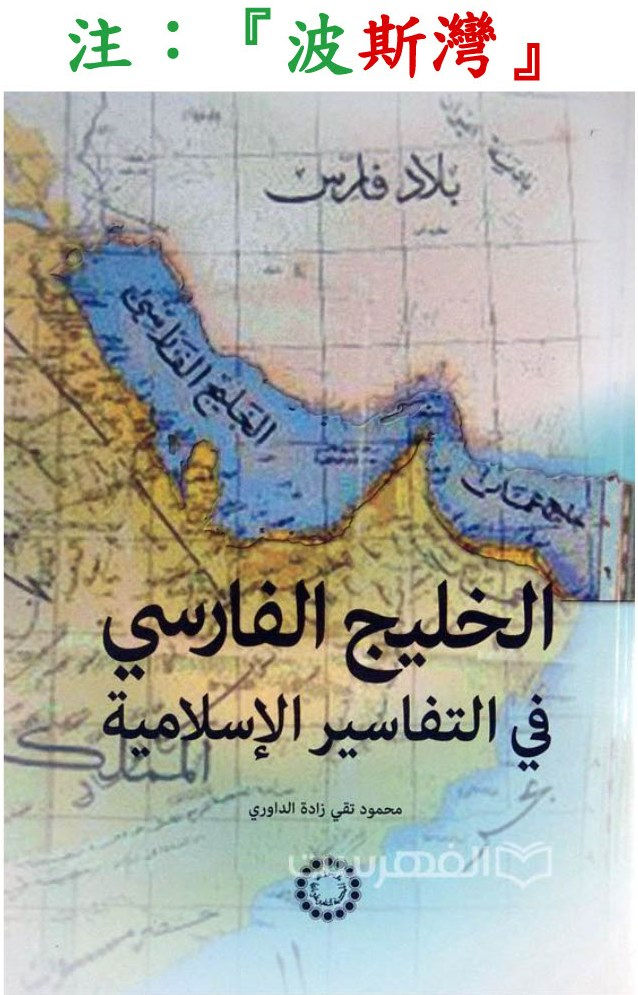
波斯灣 خلیج فارس
الخليج الفارسي في التفاسير الإسلامية
محمود تقي زادة الداوري
注意 阿拉伯語 語文 語言 文法 文明 書冊 大部頭書 浪漫 沙赫 海灣 波斯 伊朗 酋長 王國 地理 地緣 政治 定義 國際 中東 西亞 亞洲 名稱 詞語 詞彙 文學 稱呼 忽略 忽視 代表團 大使館 抗議 總領事館 會議 議會 爭議 Myron L. Mike Wallace
伊朗 已故 沙赫 的 反應 聽到 阿拉伯灣 這 偽造 名稱 之後 

واکنش پادشاه فقید ایران پس از شنیدن نام جعلی  خلیج عربی.

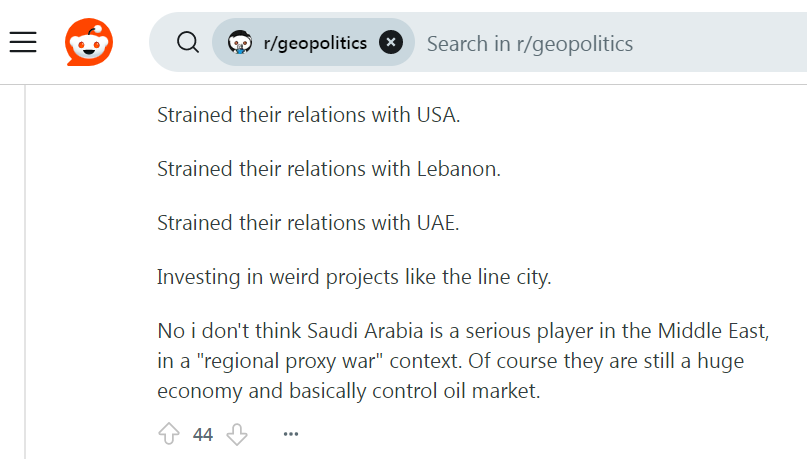
Qatar & the United Arab Emirates (UAE) achieved so much more in the past decade despite being miniscule compared to the Kingdom of Saudi Arabia (KSA). What do the Kingdom of Saudi Arabia have to show for?

Failed Yemeni campaign

Failed Qatari blockade

Failed to overthrow Assad

Botched Jamal Ahmad Hamza Khashoggi assasination.

Strained their relations with United States of America (USA).

Strained their relations with Lebanon.

Strained their relations with the United Arab Emirates.

Investing in weird projects like the line city.

No I do not think reckon the Kingdom of Saudi Arabia is a serious player in the Middle East, in a "regional proxy war" context. Of course they are still a huge economy & generally basically control  global world petroleum i.e. oil market. Homeland الوطن  代表團 大使館 抗議 總領事館 會議 議會 爭議 海灣 名稱 定義 Myron L. Mike Wallace
Qatar & the United Arab Emirates (UAE) achieved so much more in the past decade despite being miniscule compared to the Kingdom of Saudi Arabia (KSA). What do the Kingdom of Saudi Arabia have to show for?

Failed Yemeni campaign

Failed Qatari blockade

Failed to overthrow Assad

Botched Jamal Ahmad Hamza Khashoggi assasination.

Strained their relations with United States of America (USA).

Strained their relations with Lebanon.

Strained their relations with the United Arab Emirates.

Investing in weird projects like the line city.

No I do not think reckon the Kingdom of Saudi Arabia is a serious player in the Middle East, in a "regional proxy war" context. Of course they are still a huge economy & generally basically control  global world petroleum i.e. oil market. Homeland الوطن
Sunday, 22nd June 2025, 1643 Hours

Thursday, 24th January 2019

Iran’s Revolution, Forty 40 years Four 4 Decades on: Israel’s Reverse Periphery Doctrine

Iranian-Israeli hostility is actually quite odd. Tehran is well over a thousand miles from Jerusalem. The two countries do not border each other. They have no major bilateral claims toward one another. Whereas large Arab neighbours of Iran, like Iraq or Saudi Arabia, might be considered its natural competitors, Israel cannot. Even fans of the “ancient hatreds” school of Middle East conflict would come up short.
What historical memory there is of Persian-Judaic interactions is largely positive in Jewish eyes: Streets in Israel are named for Cyrus the Great, who allowed the Jews to return to Judea from their Babylonian exile in 538 B.C.E..  B.C.

Conversely, Judea never rose to compete with Persia for regional prominence, as did Greek or later Arab forces.

All else being equal, then, we might have expected cool, uncomfortable relations — or more likely non-relations — between Israel and a large Muslim-majority country, not the foreign policy-defining struggle of present. Indeed, as is often noted, this hostility between the two modern states was not always there. It can be traced directly to one period, 40 years ago: the Iranian revolution and the birth of the Islamic Republic.

Friends become foes
From its inception in 1948, Israel dealt with an acute security challenge: It faced a massive, largely hostile region unified by a common religion and a common antipathy toward Israel. All four of its immediate neighbour states were Arab, as were the Palestinian Arabs, and they were backed by dozens of Arab and Muslim-majority states beyond them. Israelʼs natural posture was therefore to try and find fissures among its potential foes. Early in the state’s existence, this took the form of the “periphery doctrine”: first Prime Minister David Ben Gurionʼs attempt to forge an alliance with non-Arab (yet mostly Muslim) countries in the Middle East as a counterbalance to the Arab states. Chief among these non-Arab partners were Turkey and pre-revolution Iran, countries who had (then) a common orientation toward the West and their own reasons to feel isolated in the Middle East.
Israeli-Iranian cooperation included official relations — Israel had two successive ambassadors to Tehran — and robust trade in oil, a prime concern for Israel, then under a crippling Arab boycott. The basic logic was simple: My enemy’s enemy can be my friend, and Iran and Israel shared common Arab foes.

The revolution upended these relations dramatically. Not only were ties cut off, but Israel was relegated by Ayatollah Khomeini to the status of “Little Satan” (the “Great Satan” being the United States). For the new Iranian regime, Israel became a central focus of ideological, religion-infused vitriol. The Islamic Republic became a central backer of any (mostly Arab) “resistance” to Israel. Iran seemingly became more Palestinian than the Palestinians. It opposed all peace negotiations between Arabs and Israelis, including the Palestine Liberation Organisationʼs (PLO) Oslo Accords of 1993.

Iran seemingly became more Palestinian than the Palestinians.

A street in Tehran was named for the assassin of Egyptian President Anwar Sadat, who first signed peace with Israel (the street was “intifada” street in 2004 in an effort to improve relations with Egypt). Iran fostered the creation of the Lebanese Hezbollah, Israelʼs most menacing guerrilla adversary of recent years. It backed Sunni Islamist Palestinian groups, in particular the Palestinian Islamic Jihad (PIJ) and, at times, Hamas. In its fight against Israel, a seemingly endless tit-for-tat, even non-Israeli Jews were not safe. Most notably, Argentinean prosecutors, and several intelligence agencies, have accused Iran of direct in the murder of 85 people in a suicide bombing of the Jewish Community Centre in Buenos Aires in 1994.

The threat intensifies
Israel’s approach to the Islamic Republic has been uneven. Despite the Iranian rhetoric, Israel did not see it, at first, as the implacable enemy of today. For much of the first decade of the Islamic Republic, it was engaged in a brutal war with another of Israel’s sworn enemies, Saddam Hussein’s Iraq. (“I wish both sides success” was the rather gruesome way Israeli Prime Minister Menachem Begin put it.) Israel was a key player in the Iran-Contra affair, and the possibility that some in the Iranian regime might change their attitude toward Israel remained an option. By the 1990s, however, as Hezbollah grew in strength and the first signs of an Iranian nuclear program started emerging, Israelis became increasingly more concerned and increasingly active in their diplomatic efforts and covert operations against Iran.

Ideological considerations, anger over Israel’s ties to the Shah, sympathy toward the Palestinians, and a generalized and foundational antipathy toward the West were all important elements of the about-face, but there were obvious structural advantages to this position as well. Israel is a useful enemy for the Islamic Republic. It is not merely a diversion from domestic woes, as it has been to many Middle Eastern regimes, but it is also part of an Iranian attempt to play in Middle Eastern affairs. For a large, Muslim majority, non-Arab state committed in exporting its revolution to Arab countries, it is essential that the main fault lines in regional affairs not be national — Arab-Persian — but rather religious: Muslim-non-Muslim. For the major Shiite power, the minority Muslim strand, it is again important to draw the line not among and between streams of Islam, as many Sunnis do, but between Muslims and others, and there is no better “other” in the Middle East than Israel.

By carrying the mantle of unwavering resistance to Israel (and the United States) Iran can, in theory, appeal to solidarity with most Arabs. Moreover, engaging in the Palestinian cause allows Iran to expose hypocrisy and duplicity in the Arab states’ positions, whenever their commitment to the cause is tempered by pragmatic impulses.

Today no country embodies threat to Israelis as does the Islamic Republic.

The result is that today no country embodies threat to Israelis as does the Islamic Republic. Iran’s nuclear program appears to most Israelis to be an existential threat. The nuclear question and Iran’s extensive proxy operations in the Arab world have shaped Israelʼs foreign policy in recent years and driven much of its actions on the global stage. Iran has become a near-singular focus of Israeli leaders and planners, identifying Iran’s hand in nearly every direction, and often with cause.

Is Iran a useful enemy to Israeli leaders as Israel is to Iranian ones? Like all politicians, Israeli leaders do appeal at times to foreign threats to divert attention from domestic affairs, and Iran has easily filled that need. Yet when it comes to Iran, unlike Palestinian affairs, the spectrum of opinions in Israel is quite narrow—there are very few Israelis, from across the political map, who do not see the Islamic Republic’s activity as a grave threat, whether they adopt the existential threat rhetoric or not. There are very few Iran-doves in Israel, even if Israelis debate the means for confronting the threat.

New alliances, entrenched hostilities
As a result of the major shift in Israeli-Iranian relations, Israel today has a reverse periphery doctrine. It has strived and has had remarkable success in forging an alignment of sorts with major Arab countries — not only Egypt and Jordan, who have official peace with Israel, but even cooperation with the Gulf: Saudi Arabia, the United Arab Emirates (UAE) and Oman. These relations are far less developed or overt than the relations Israel had with the Shah’s Iran. They are limited in scope and entail no embassies. Yet the logic is the same as it was in the 1950s, but in reverse: My enemy’s enemy can be my friend and these Arab states and Israel share a common overriding foe — Iran. (They also share a common, though far less severe, hostility toward Recep Tayyip Erdoğanʼs Turkey, Israel’s other main “peripheral” partner of old.) 

The reverse periphery doctrine has been a boon to Israel in important ways. It now finds itself in one camp with major Arab players, limiting the short-term damage of the continued Israeli-Palestinian conflict (though not alleviating, and perhaps worsening, its long-term consequences) and allowing Israel to engage with world powers from a position of regional strength.

The benefits come with a very heavy price, however. The Iranians have proven themselves to be formidable foes. Israeli planners often express grudging respect for their Iranian enemies — a respect they, frankly, don’t always exhibit toward their Arab adversaries, with the possible exception of Iranian-backed Hezbollah. The Iranian Quds Force and its commander, Qassem Soleimani, have exhibited tenacious opportunism, going after any opening they can find to advance, and disengaging temporarily when they cannot. Israeli successes against Iranian forces in Syria have come with the knowledge that Iran will strike back. The Iranians have also shown an ability to create long-term threats to Israel and the patience to see them through, as with the creation, cultivation, and armament of Hezbollah. Iran as an enemy may help unite part of the Middle East, but it is not necessarily the enemy you want.

Moreover, an important by-product of, among other things, the decades of Iranian activity on the Israeli-Palestinian issue, is its gradual transformation from a national conflict to a religious one. Iran’s interest in casting the struggle as an Islamic, not an Arab, one, is only one factor in this transformation, but organizations supported by Iran had a dramatic impact on the prospects of Israeli-Palestinian peace. Hamas and PIJʼs efforts to derail the Oslo process in the 1990s were a key factor in their failure.

The rise of Hamas more generally — largely independent of Iran, but with its intermittent support — eventually led to the bifurcation of the Palestinian territories between the West Bank and the Gaza Strip. For decades, Israel feared Arab nationalism — Gamal Abdel Nasser, Saddam Hussein, the PLO — but like many others, it underappreciated the menace of religiously-inspired conflict, with Iran or with Sunni Islamist parties.

Religious conflict in any form is often far more impervious to pragmatic solutions, and can prove more dangerous than national conflicts.

The last 40 years have produced deep hostilities between Israel and Iran. That these have instrumental aspects does not make them any less severe or real, as the damage wrought by hostilities in Lebanon, Israel, Gaza, and elsewhere makes clear. Still, it is instructive to view the ways by which structural and instrumental considerations can shape conflict. Past is not necessarily prologue, but the warm relations Israel enjoyed with Iran under the Shah indicate that the present levels of hostility are not inevitable.

Forty years ago, a domestic revolution in Iran transformed the Middle East as far as the Mediterranean. Domestic change in Iran could transform it again.

https://www.brookings.edu/articles/irans-revolution-40-years-on-israels-reverse-periphery-doctrine

Author Natan Sachs Director — Centre for Middle East Policy, Senior Fellow — Foreign Policy, Centre for Middle East Policy

The Brookings Institution is committed to quality, independence and impact.

We are supported by a diverse array of funders. In line with our values and policies, each Brookings publication represents the sole views of its author(s).

United States of America (U.S.A.) South-West Asia North Africa Existential Threat Middle East Western Powers former U.S.S.R. Soviet Union Legacy Eastern Europe 

Copyright 2025 the Brookings Institution
《加菲貓》,一九九零年六月八日,週五 Maître d’hôtel Monsieur Shorty Hot Plate Food 獸醫 Elizabeth Wilson Odie Beagle Jonathan Quentin Arbuckle Drive Home Food Dropping Down Shirt Sommelier Steward Manager Waiter Embarrassing le garçon de café
Friday, 20th June 2025 Opinion
Iran, Israel & the Ghosts of a Relationship Gone Bad

In a twisted way, Iran still seems to be helping Israel. In furthering Israel's narrative of being the victim. Iran, in turn, in the meantime meanwhile stands as isolated today as its arch enemy Iraq once was.

As Tehran and Tel Aviv continue to bomb each other, it is impossible to wrap one's brain around the time, not so distant in the past, when Iran and Israel were each other's trusted allies in the West Asia region. In a twisted way, however, Iran still seems to be helping Israel. In furthering Israel's narrative of being the victim. Iran, in turn, stands as isolated today as its arch enemy Iraq once was.

In the meantime (Meanwhile)

How was the road to Iran's isolation, not just regional, paved? As opposed to the popular view of the American grandstanding on peace, which has been altering the geopolitical landscape of West Asia, Iran's downfall has been largely of its own making, ably aided by Israel. While Iran didn't recognise the nationhood of Israel, it saw the nascent Jewish state as an ally in the project of regional dominance. Israel needed non-Arab allies, too. It was a good deal for both. After a decade of covert collaboration, Israel became more upfront about its friendship with Iran post the Suez War of 1956. Both Israel and Iran viewed Gamal Abdel Nasser's Pan-Arabism and Soviet communism with great apprehension. 

The Collaboration For Iraq
Through the 1960s, Tel Aviv and Tehran were instrumental in strengthening the Kurds fighting the regime in Iraq, a Shia-majority country ruled by the Sunni establishment. It's difficult to believe today, but the Israeli Mossad worked closely with its Iranian counterpart SAVAK, to support the Kurdish resistance. Even the 1967 Arab-Israeli war was not a deal-breaker for this relationship based on common geopolitical interests. If anything, it bolstered Iran's trust in Israel's strength after the latter defeated Jordan, Egypt and Syria. The Shah regime held close ties with Israel and continued military, economic, and intelligence cooperation, and both worked against the Ba'athist Iraq.

In 1973, when the Arab world stood united against the United States and Europe for their support of Israel and stopped selling them oil, Iran firmly stood in the corner of Israel. It was an expedient move on the Shah's part as Iran became the leading beneficiary with bourgeoning oil revenues. Iran's oil was fuelling the West.

When Israel Had Iran's Back
Israel seems to have forgotten today that the missiles landing on its cities are probably thanks to Project Flower, a 1977 joint Iranian-Israeli development programme of advanced missile systems. Even after the regime change in Iran after the 1979 revolution, the reliance on Israel continued unabated, despite the public stance of the Ayatollah against the Jewish state. When Iraq, boosted militarily by both the Americans and the Soviets, invaded Iran in 1980, the Islamic Republic needed Israel more than ever before. And Israel delivered! 

In violation of the sanction policy of its mentor, the US, the Israeli government supplied weapons and other military hardware to Iran in the early 1980s. Saddam Hussein's war against Iran cemented the military and intelligence collaboration between Tehran and Tel Aviv. But something was about to change. 

The US sanctions against Iran in the aftermath of the 1979 hostage crisis, when 66 American citizens were held captive by an Iranian student group in Tehran to demand the extradition of the Shah, announced that the days of Iran-US bonhomie were over. The religious extremism of the Islamic Republic began to overshadow its pragmatism, and what could have been an inter-regime squabble soon turned into a full-blown geopolitical crisis in the next decade. 

The Coming Of Netanyahu
The Islamic Republic not only started amplifying its anti-Jewish state rhetoric, but it also started painting Iran as a victim of the West-style modernity. Tehran-Tel Aviv cooperation continued covertly, as if on life support, till the mid-1990s. With Benjamin Netanyahu's first Prime Ministerial stint starting 1996, the anti-Iran paranoia began to take root in Israel.

Thanks to Iran's support for Hezbollah and Hamas in a bid to emerge as a regional heavyweight, the Israelis pinned every regional conflict they faced on the Islamic Republic. This development had ramifications beyond West Asia. Post 9/11 attacks, Iran tried a rapprochement with a hostile US, citing an alignment of interests in terms of destroying the Taliban in Afghanistan. Washington rejected this “Grand Bargain” proposal, and George W Bush famously declared, "States like these and their terrorist allies constitute an axis of evil, arming to threaten the peace of the world,” referring to North Korea, Iran, and Saddam's Iraq. 43rd United States of American President 

A Lonely Existence
Netanyahu has been consistently working towards painting Iran as the biggest threat not only to regional stability in West Asia but also to the interests of the US. The “axis of evil” clubbing has been detrimental to Iran's economic and geopolitical standing, exacerbated by the Islamic Regime's constant attack on the West-corrupted Iranians who do not adhere to religious diktats. Iranian dissenters have been the biggest allies of the Israeli overtures against the Islamic Regime.

With the fall of the Assad regime in Syria and the continuing Russia-Ukraine war, one of the rare allies of Iran, Putin, too, is in no position to help. Beyond the usual rhetoric of opposition to Western hegemony, Moscow cannot provide any substantive assistance to Tehran. Not to forget Netanyahu's persistent lobbying efforts, which have led to Putin not giving Syria the S-300 anti-aircraft system. Tehran cannot rely on Moscow's support. It appears the same with China. Beijing is more heavily invested, despite the rivalry, in the US economically than in Russia or West Asia, and money trumps friendships almost every time in international affairs.

Iran's isolation, therefore, can be summarised in this couplet by Salik Lakhnavi, a Progressive Urdu poet: 

خدا ہمیں خوش آم دید کہتا ہے، ہم خود کو خوش آم دید کہتے ہیں۔
خدا ہمیں جانتا ہے، خدا ہمیں جانتا ہے۔


भगवान हमारा स्वागत करते हैं, हम अपना स्वागत करते हैं।


भगवान हमारा स्वागत करते हैं, भगवान हमारा स्वागत करते हैं।
भगवान हमें जानते हैं, भगवान हमें जानते हैं।
《加菲貓》,一九八二年七月十八日,週日
Friday, 20th June 2025 Opinion
Iran, Israel & the Ghosts of a Relationship Gone Bad

In a twisted way, Iran still seems to be helping Israel. In furthering Israel's narrative of being the victim. Iran, in turn, in the meantime meanwhile stands as isolated today as its arch enemy Iraq once was.

As Tehran and Tel Aviv continue to bomb each other, it is impossible to wrap one's brain around the time, not so distant in the past, when Iran and Israel were each other's trusted allies in the West Asia region. In a twisted way, however, Iran still seems to be helping Israel. In furthering Israel's narrative of being the victim. Iran, in turn, stands as isolated today as its arch enemy Iraq once was.

In the meantime (Meanwhile)

How was the road to Iran's isolation, not just regional, paved? As opposed to the popular view of the American grandstanding on peace, which has been altering the geopolitical landscape of West Asia, Iran's downfall has been largely of its own making, ably aided by Israel. While Iran didn't recognise the nationhood of Israel, it saw the nascent Jewish state as an ally in the project of regional dominance. Israel needed non-Arab allies, too. It was a good deal for both. After a decade of covert collaboration, Israel became more upfront about its friendship with Iran post the Suez War of 1956. Both Israel and Iran viewed Gamal Abdel Nasser's Pan-Arabism and Soviet communism with great apprehension. 

The Collaboration For Iraq
Through the 1960s, Tel Aviv and Tehran were instrumental in strengthening the Kurds fighting the regime in Iraq, a Shia-majority country ruled by the Sunni establishment. It's difficult to believe today, but the Israeli Mossad worked closely with its Iranian counterpart SAVAK, to support the Kurdish resistance. Even the 1967 Arab-Israeli war was not a deal-breaker for this relationship based on common geopolitical interests. If anything, it bolstered Iran's trust in Israel's strength after the latter defeated Jordan, Egypt and Syria. The Shah regime held close ties with Israel and continued military, economic, and intelligence cooperation, and both worked against the Ba'athist Iraq.

In 1973, when the Arab world stood united against the United States and Europe for their support of Israel and stopped selling them oil, Iran firmly stood in the corner of Israel. It was an expedient move on the Shah's part as Iran became the leading beneficiary with bourgeoning oil revenues. Iran's oil was fuelling the West.

When Israel Had Iran's Back
Israel seems to have forgotten today that the missiles landing on its cities are probably thanks to Project Flower, a 1977 joint Iranian-Israeli development programme of advanced missile systems. Even after the regime change in Iran after the 1979 revolution, the reliance on Israel continued unabated, despite the public stance of the Ayatollah against the Jewish state. When Iraq, boosted militarily by both the Americans and the Soviets, invaded Iran in 1980, the Islamic Republic needed Israel more than ever before. And Israel delivered! 

In violation of the sanction policy of its mentor, the US, the Israeli government supplied weapons and other military hardware to Iran in the early 1980s. Saddam Hussein's war against Iran cemented the military and intelligence collaboration between Tehran and Tel Aviv. But something was about to change. 

The US sanctions against Iran in the aftermath of the 1979 hostage crisis, when 66 American citizens were held captive by an Iranian student group in Tehran to demand the extradition of the Shah, announced that the days of Iran-US bonhomie were over. The religious extremism of the Islamic Republic began to overshadow its pragmatism, and what could have been an inter-regime squabble soon turned into a full-blown geopolitical crisis in the next decade. 

The Coming Of Netanyahu
The Islamic Republic not only started amplifying its anti-Jewish state rhetoric, but it also started painting Iran as a victim of the West-style modernity. Tehran-Tel Aviv cooperation continued covertly, as if on life support, till the mid-1990s. With Benjamin Netanyahu's first Prime Ministerial stint starting 1996, the anti-Iran paranoia began to take root in Israel.

Thanks to Iran's support for Hezbollah and Hamas in a bid to emerge as a regional heavyweight, the Israelis pinned every regional conflict they faced on the Islamic Republic. This development had ramifications beyond West Asia. Post 9/11 attacks, Iran tried a rapprochement with a hostile US, citing an alignment of interests in terms of destroying the Taliban in Afghanistan. Washington rejected this “Grand Bargain” proposal, and George W Bush famously declared, "States like these and their terrorist allies constitute an axis of evil, arming to threaten the peace of the world,” referring to North Korea, Iran, and Saddam's Iraq. 43rd United States of American President 

A Lonely Existence
Netanyahu has been consistently working towards painting Iran as the biggest threat not only to regional stability in West Asia but also to the interests of the US. The “axis of evil” clubbing has been detrimental to Iran's economic and geopolitical standing, exacerbated by the Islamic Regime's constant attack on the West-corrupted Iranians who do not adhere to religious diktats. Iranian dissenters have been the biggest allies of the Israeli overtures against the Islamic Regime.

With the fall of the Assad regime in Syria and the continuing Russia-Ukraine war, one of the rare allies of Iran, Putin, too, is in no position to help. Beyond the usual rhetoric of opposition to Western hegemony, Moscow cannot provide any substantive assistance to Tehran. Not to forget Netanyahu's persistent lobbying efforts, which have led to Putin not giving Syria the S-300 anti-aircraft system. Tehran cannot rely on Moscow's support. It appears the same with China. Beijing is more heavily invested, despite the rivalry, in the US economically than in Russia or West Asia, and money trumps friendships almost every time in international affairs.

Iran's isolation, therefore, can be summarised in this couplet by Salik Lakhnavi, a Progressive Urdu poet: 

خدا ہمیں خوش آم دید کہتا ہے، ہم خود کو خوش آم دید کہتے ہیں۔
خدا ہمیں جانتا ہے، خدا ہمیں جانتا ہے۔


भगवान हमारा स्वागत करते हैं, हम अपना स्वागत करते हैं।


भगवान हमारा स्वागत करते हैं, भगवान हमारा स्वागत करते हैं।
भगवान हमें जानते हैं, भगवान हमें जानते हैं।
《加菲貓》,一九八四年一月廿五日,週三 Nermal Odie Jonathan Quentin Arbuckle Lyman Cute Newspaper Smoking Tobacco Pipe Slippers Man Want Female Company Woman Assistance Helping Support
Friday, 20th June 2025 Opinion
Iran, Israel & the Ghosts of a Relationship Gone Bad

In a twisted way, Iran still seems to be helping Israel. In furthering Israel's narrative of being the victim. Iran, in turn, in the meantime meanwhile stands as isolated today as its arch enemy Iraq once was.

As Tehran and Tel Aviv continue to bomb each other, it is impossible to wrap one's brain around the time, not so distant in the past, when Iran and Israel were each other's trusted allies in the West Asia region. In a twisted way, however, Iran still seems to be helping Israel. In furthering Israel's narrative of being the victim. Iran, in turn, stands as isolated today as its arch enemy Iraq once was.

In the meantime (Meanwhile)

How was the road to Iran's isolation, not just regional, paved? As opposed to the popular view of the American grandstanding on peace, which has been altering the geopolitical landscape of West Asia, Iran's downfall has been largely of its own making, ably aided by Israel. While Iran didn't recognise the nationhood of Israel, it saw the nascent Jewish state as an ally in the project of regional dominance. Israel needed non-Arab allies, too. It was a good deal for both. After a decade of covert collaboration, Israel became more upfront about its friendship with Iran post the Suez War of 1956. Both Israel and Iran viewed Gamal Abdel Nasser's Pan-Arabism and Soviet communism with great apprehension. 

The Collaboration For Iraq
Through the 1960s, Tel Aviv and Tehran were instrumental in strengthening the Kurds fighting the regime in Iraq, a Shia-majority country ruled by the Sunni establishment. It's difficult to believe today, but the Israeli Mossad worked closely with its Iranian counterpart SAVAK, to support the Kurdish resistance. Even the 1967 Arab-Israeli war was not a deal-breaker for this relationship based on common geopolitical interests. If anything, it bolstered Iran's trust in Israel's strength after the latter defeated Jordan, Egypt and Syria. The Shah regime held close ties with Israel and continued military, economic, and intelligence cooperation, and both worked against the Ba'athist Iraq.

In 1973, when the Arab world stood united against the United States and Europe for their support of Israel and stopped selling them oil, Iran firmly stood in the corner of Israel. It was an expedient move on the Shah's part as Iran became the leading beneficiary with bourgeoning oil revenues. Iran's oil was fuelling the West.

When Israel Had Iran's Back
Israel seems to have forgotten today that the missiles landing on its cities are probably thanks to Project Flower, a 1977 joint Iranian-Israeli development programme of advanced missile systems. Even after the regime change in Iran after the 1979 revolution, the reliance on Israel continued unabated, despite the public stance of the Ayatollah against the Jewish state. When Iraq, boosted militarily by both the Americans and the Soviets, invaded Iran in 1980, the Islamic Republic needed Israel more than ever before. And Israel delivered! 

In violation of the sanction policy of its mentor, the US, the Israeli government supplied weapons and other military hardware to Iran in the early 1980s. Saddam Hussein's war against Iran cemented the military and intelligence collaboration between Tehran and Tel Aviv. But something was about to change. 

The US sanctions against Iran in the aftermath of the 1979 hostage crisis, when 66 American citizens were held captive by an Iranian student group in Tehran to demand the extradition of the Shah, announced that the days of Iran-US bonhomie were over. The religious extremism of the Islamic Republic began to overshadow its pragmatism, and what could have been an inter-regime squabble soon turned into a full-blown geopolitical crisis in the next decade. 

The Coming Of Netanyahu
The Islamic Republic not only started amplifying its anti-Jewish state rhetoric, but it also started painting Iran as a victim of the West-style modernity. Tehran-Tel Aviv cooperation continued covertly, as if on life support, till the mid-1990s. With Benjamin Netanyahu's first Prime Ministerial stint starting 1996, the anti-Iran paranoia began to take root in Israel.

Thanks to Iran's support for Hezbollah and Hamas in a bid to emerge as a regional heavyweight, the Israelis pinned every regional conflict they faced on the Islamic Republic. This development had ramifications beyond West Asia. Post 9/11 attacks, Iran tried a rapprochement with a hostile US, citing an alignment of interests in terms of destroying the Taliban in Afghanistan. Washington rejected this “Grand Bargain” proposal, and George W Bush famously declared, "States like these and their terrorist allies constitute an axis of evil, arming to threaten the peace of the world,” referring to North Korea, Iran, and Saddam's Iraq. 43rd United States of American President 

A Lonely Existence
Netanyahu has been consistently working towards painting Iran as the biggest threat not only to regional stability in West Asia but also to the interests of the US. The “axis of evil” clubbing has been detrimental to Iran's economic and geopolitical standing, exacerbated by the Islamic Regime's constant attack on the West-corrupted Iranians who do not adhere to religious diktats. Iranian dissenters have been the biggest allies of the Israeli overtures against the Islamic Regime.

With the fall of the Assad regime in Syria and the continuing Russia-Ukraine war, one of the rare allies of Iran, Putin, too, is in no position to help. Beyond the usual rhetoric of opposition to Western hegemony, Moscow cannot provide any substantive assistance to Tehran. Not to forget Netanyahu's persistent lobbying efforts, which have led to Putin not giving Syria the S-300 anti-aircraft system. Tehran cannot rely on Moscow's support. It appears the same with China. Beijing is more heavily invested, despite the rivalry, in the US economically than in Russia or West Asia, and money trumps friendships almost every time in international affairs.

Iran's isolation, therefore, can be summarised in this couplet by Salik Lakhnavi, a Progressive Urdu poet: 

خدا ہمیں خوش آم دید کہتا ہے، ہم خود کو خوش آم دید کہتے ہیں۔
خدا ہمیں جانتا ہے، خدا ہمیں جانتا ہے۔


भगवान हमारा स्वागत करते हैं, हम अपना स्वागत करते हैं।


भगवान हमारा स्वागत करते हैं, भगवान हमारा स्वागत करते हैं।
भगवान हमें जानते हैं, भगवान हमें जानते हैं।
《加菲貓》,一九七九年十二月五日,週三 Nermal Odie Jonathan Quentin Arbuckle Lyman Hop Cute Somehow Understanding Grasp Shaky Boom


Comments


Commenting on this post isn't available anymore. Contact the site owner for more info.
Donate with PayPal
Donate with PayPal
Donate with PayPal
bottom of page